Description
Permanent Marker (Cannabis Strain)
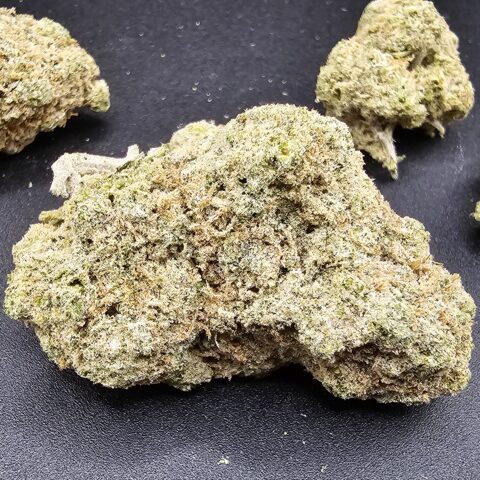
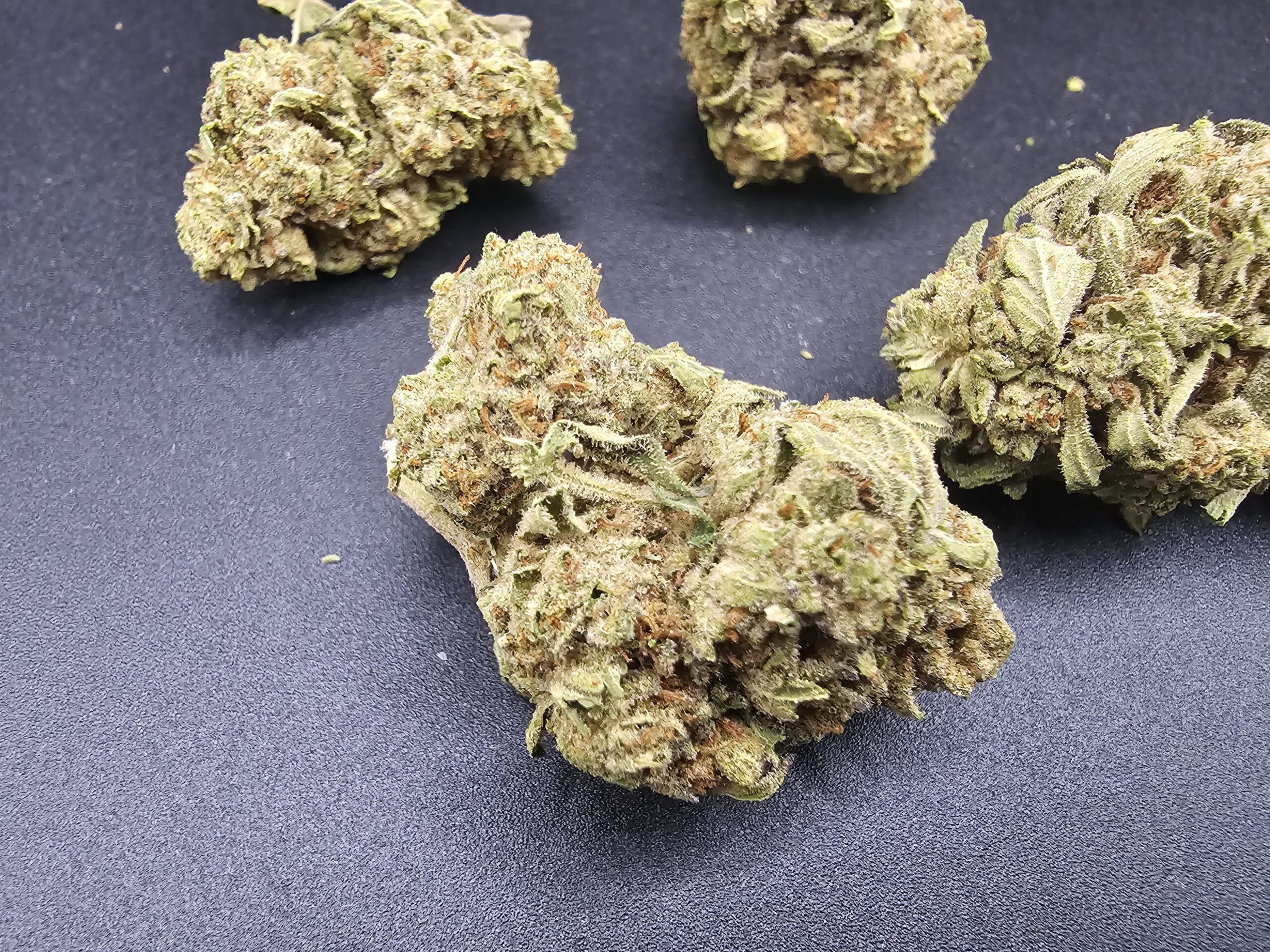
Permanent Marker is an indica-dominant hybrid cultivar typically reporting between 25% and 31% THC, bred by JBeezy of Seed Junky Genetics and selected and commercialized by Doja Exclusive (Doja Pak). Developed through a three-way cross of (Biscotti × Jealousy) × Sherb Bx, the cultivar received widespread industry recognition, including selection as Leafly’s Strain of the Year in 2023. Botanically, it produces compact, spade-shaped inflorescences characterized by dense capitate-stalked glandular trichome coverage across deep violet, midnight purple, and dark green bracts. Its reported aromatic profile consists of pungent chemical solvent, petroleum hydrocarbon, and floral gas notes, accompanied by sweet candy and peppery earth undertones. Cultivators report dependable biomass accumulation and high resin gland density suitable for mechanical and solvent-based extraction.
The genetic architecture combines the floral density, baked-dough profile, and physical relaxation associated with Biscotti with the anthocyanin accumulation and fuel-forward aromatics of Jealousy, further stabilized by the sweet dessert notes of the Sherb Bx lineage. In cultivation environments, the cultivar displays vigorous hybrid vegetative growth and moderate internodal spacing. Reported consumer experiences describe a rapid onset of cerebral stimulation and elevated mood, which gradually transitions into full-body physical relaxation.
Quick Facts
| Field | Details |
|---|---|
| Breeder / Selector | Seed Junky Genetics (JBeezy) / Selected by Doja Pak |
| Genetics | (Biscotti × Jealousy) × Sherb Bx |
| Variety | Indica-dominant Hybrid (approx. 70/30) |
| Reported THC Range | 25% – 31% |
| Reported Flowering Time | 8 – 9 weeks (56 – 63 days) |
| Yield Potential | Moderate to High |
| Plant Height | Medium (approx. 110 – 150 cm) |
| Climate Preference | Temperate, climate-controlled indoor environments |
| Cultivation Complexity | Moderate |
Scientific & Botanical Overview
Morphologically, Permanent Marker exhibits hybrid growth characteristics with prominent indica structural traits, developing broad fan leaves, rigid central stalks, and compact nodal clustering. In vegetative stages, it establishes an extensive root mass capable of processing standard-to-heavy nutrient regimens. The canopy develops strong secondary branching that readily supports the weight of dense terminal inflorescences.
During the flowering cycle, the cultivar forms compact, rounded spade-shaped bract clusters with a high calyx-to-leaf ratio. The flowers produce a dense layer of capitate-stalked glandular trichomes with intact cuticle membranes. Foliage displays dark forest-green tones that frequently express anthocyanin-driven violet and midnight purple pigmentation during late bloom—particularly when night temperatures are reduced—interspersed with copper-to-orange stigmas.
Because the mature floral clusters are structurally compact and heavily resinous, standard environmental management protocols recommend maintaining low relative humidity in late bloom to minimize the risk of microclimate humidity entrapment within the colas.
Reported Effects & Consumer Observations
Commonly reported effects: Consumer reports commonly document an initial phase of cerebral stimulation, characterized by mood elevation, creative focus, and mental alertness. As the initial onset stabilizes, observations note a gradual shift toward full-body physical relaxation and reduced muscle tension, typically without immediate heavy sedation at moderate intake levels.
Contextual use-cases: Permanent Marker is commonly chosen for late afternoon, evening, or social consumption. Users frequently select it for low-impact creative activities, leisure, or end-of-day unwinding. At higher dosages, reported experiences indicate increased physical heaviness and sedative qualities.
Note: Cannabinoid sensitivity and individual tolerance vary widely. Due to the high reported THC concentration of this cultivar, conservative dosing is standard practice for evaluating individual response.
Aroma & Flavors
Aroma: The aromatic profile is characterized by pungent chemical solvent, marker ink, and industrial fuel notes, supported by background layers of sweet fruit candy, floral soap, and earthy pepper.
Flavor: Vapor and smoke profiles deliver a dominant taste of chemical solvent, skunky gas, and sweet fruit candy on the inhale, transitioning to an earthy dough, subtle vanilla, and peppery finish on the exhale.
Associated Terpenes: Analytical profiles commonly identify beta-caryophyllene, limonene, and myrcene as prominent constituents, with secondary contributions of humulene and linalool contributing to its complex solvent and dessert-spice bouquet.
Reported Cannabinoid & Terpene Ranges
| Compound | Reported Range |
|---|---|
| Δ9-THC | 25.0% – 31.0% |
| CBD | < 1.0% |
| CBG | 0.6% – 1.6% |
| Beta-Caryophyllene | 0.6% – 1.3% |
| Limonene | 0.4% – 0.9% |
| Myrcene | 0.3% – 0.8% |
Analytical note: Cannabinoid concentrations and terpene ratios vary depending on specific phenotype selection, growing media, environmental parameters, nutritional inputs, and post-harvest drying and curing protocols.
Cultivar Observations & General Cultivation Guidelines
Cultivar-Specific Observations: Permanent Marker displays steady vegetative growth, manageable flowering stretch (typically 60–80% vertical expansion), and high calyx density. The dense structure of the colas makes environmental monitoring essential in the late flowering window.
General Cultivation Protocols:
- Canopy Management: Standard horticultural techniques such as early topping at the 4th node and Screen of Green (SCROG) trellising are widely used across hybrid cultivars to promote even light distribution and support lateral branches.
- Defoliation Practices: Strategic defoliation around day 21 and day 42 of the flowering cycle is commonly employed to remove large shade leaves and improve airflow through dense canopies.
- Humidity & Environment: Maintaining relative humidity around 55–60% during vegetative development and reducing levels to 40–45% during late bloom is standard practice to safeguard dense inflorescences from mold development.
- Harvest Timing: Determining harvest readiness is generally conducted by monitoring glandular trichome heads, with growers often targeting full milky opacity and a minor percentage of amber conversion depending on preferred maturity.
Cultivation Timeline Snapshot (General Guidance)
- Weeks 1–3 (Transition & Stretch): Post-flip vertical growth typically doubles the plant’s height. Growers often secure branches to trellising and clear lower non-productive shoots during this window.
- Weeks 4–6 (Inflorescence Development): Calyxes swell and stack at internodes while glandular trichome production increases across bracts and surrounding foliage. Pungent chemical and sweet aromatics become noticeable.
- Weeks 7–9 (Ripening & Senescence): Floral clusters reach peak density. Standard practices include tapering nutrient inputs with plain water flushes and lowering nighttime temperatures to facilitate anthocyanin expression.
- Post-Harvest (Drying & Curing): Standard preservation protocols involve whole-plant hang drying in controlled darkness at approximately 60°F (15°C) and 60% relative humidity for 10–14 days, followed by a multi-week cure in sealed containers.
Genetic Lineage
Permanent Marker was bred by JBeezy at Seed Junky Genetics and selected by Doja Exclusive (Doja Pak). The maternal lineage is formed by Biscotti × Jealousy. Biscotti (Gelato #25 × South Florida OG) contributes floral density, peppery dough aromatics, and physical relaxation traits.
Jealousy (Gelato 41 × Sherb Bx1) contributes anthocyanin expression, robust lateral branching, and fuel-heavy complexity. This combination was pollinated by Sherb Bx, reinforcing resin gland density, structural stability, and sweet dessert-fruit undertones.
Scientific & Pharmacological Context
In cannabis research, cultivars expressing prominent solvent and industrial aromas are increasingly analyzed for their content of volatile sulfur compounds (VSCs). Studies indicate that low-molecular-weight sulfur compounds, such as 3-methyl-2-butene-1-thiol (prenylthiol), can produce distinct skunky and chemical notes even at trace parts-per-billion concentrations, interacting with primary monoterpenes and sesquiterpenes to shape complex sensory profiles.
From a pharmacological perspective, prominent constituent terpenes such as beta-caryophyllene are widely researched for their function as selective agonists of the peripheral cannabinoid receptor 2 (CB2), while monoterpenes like limonene and myrcene continue to be investigated for their potential modulating effects on neurotransmitter pathways. However, clinical research on the overall pharmacological effects of specific whole-flower cultivars remains ongoing.
Frequently Asked Questions
Who bred the Permanent Marker strain?
Permanent Marker was bred by JBeezy of Seed Junky Genetics and selected and brought to prominence by Doja Exclusive (Doja Pak).
Is Permanent Marker an indica or a sativa?
Permanent Marker is classified as an indica-dominant hybrid (approximately 70% indica / 30% sativa), known for balanced cerebral stimulation followed by physical relaxation.
What does Permanent Marker smell and taste like?
It carries an aromatic and flavor profile characterized by chemical marker ink, petroleum fuel, soapy floral gas, sweet candy fruit, and peppery cookie dough.
What is the reported flowering time for Permanent Marker?
Under controlled indoor cultivation conditions, Permanent Marker typically completes its flowering cycle in 8 to 9 weeks (56 to 63 days).